Nucleocytoplasmic transport, a signal- and energy-dependent process, takes place through nuclear pore complexes embedded in the nuclear envelope. The import of proteins containing a nuclear localization signal (NLS) requires the NLS import receptor, a heterodimer of importin alpha and beta subunits also known as karyopherins. Importin alpha binds the NLS-containing cargo in the cytoplasm and importin beta docks the complex at the cytoplasmic side of the nuclear pore complex. In the presence of nucleoside triphosphates and the small GTP binding protein Ran, the complex moves into the nuclear pore complex and the importin subunits dissociate. Importin alpha enters the nucleoplasm with its passenger protein and importin beta remains at the pore. Interactions between importin beta and the FG repeats of nucleoporins are essential in translocation through the pore complex. The protein encoded by this gene is a member of the importin beta family.
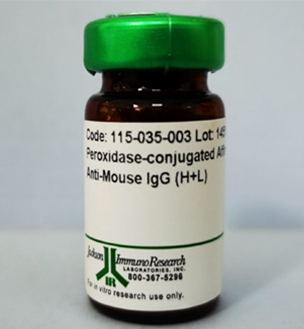
All conjugated antibodies should be stored in light-protected vials or covered with a light protecting material (i.e. aluminum foil). Conjugated antibodies are stable for at least 12 months at 4C. If longer storage is desired (24 months), conjugates may be diluted with up to 50% glycerol and stored at -20C to -80C. Freezing and thawing conjugated antibodies will compromise enzyme activity as well as antibody binding.
其他
Aviva Systems Biology总部位于加利福尼亚州圣迭戈,在中国北京设有办公室,专注于为研究需求提供多克隆和单克隆抗体、ELISA试剂盒、蛋白质和定制服务。Aviva Systems Biology生产了24,000种经过验证的多克隆抗体,并提供近20,000种ELISA试剂盒,定制实验室服务包括蛋白表达和纯化、抗体开发,以及ELISA的开发、验证和生产。Aviva Systems Biology为与独特物种和靶标相关的研究提供独特工具,研究领域包括转录因子、癌症、心血管、细胞生物学、DNA损伤和修复、表观遗传学、信号转导、细胞分化、干细胞生物学等等。