Type I Interferons (IFN-alpha/beta) are produced primarily in response to viral infection by "Natural IFN-producing cells" (IPCs) as part of the host immune response and can also inhibit the development of tumors. IFN-beta binding by its receptor results in the activation of the tyrosine kinases Jak1 and Tyk2 and phosphorylation of members of the STAT family of transcription factors, leading to the transcription and expression of the immune response genes. More recently, several members of the toll-like receptor (TLR) family were found to stimulate the production IFN-beta. IFN-beta is currently used clinically for treatment of tumors, infections and multiple sclerosis.
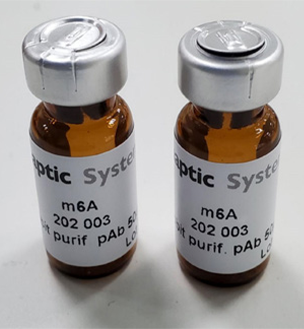
Anti-IFN-beta antibody was prepared from whole rabbit serum produced by repeated immunizations with a 17 amino acid synthetic peptide from near the internal region of human IFN-b.
来源宿主
Rabbit
反应性
H. sapiens (Human); Mus musculus (Mouse)
保存建议
Store vial at -20° C prior to opening. Aliquot contents and freeze at -20° C or below for extended storage. Avoid cycles of freezing and thawing. Centrifuge product if not completely clear after standing at room temperature. This product is stable for several weeks at 4° C as an undiluted liquid. Dilute only prior to immediate use.