This gene encodes a transmembrane receptor and is often referred to as DC-SIGN because of its expression on the surface of dendritic cells and macrophages. The encoded protein is involved in the innate immune system and recognizes numerous evolutionarily divergent pathogens ranging from parasites to viruses with a large impact on public health. The protein is organized into three distinct domains: an N-terminal transmembrane domain, a tandem-repeat neck domain and C-type lectin carbohydrate recognition domain. The extracellular region consisting of the C-type lectin and neck domains has a dual function as a pathogen recognition receptor and a cell adhesion receptor by binding carbohydrate ligands on the surface of microbes and endogenous cells. The neck region is important for homo-oligomerization which allows the receptor to bind multivalent ligands with high avidity. Variations in the number of 23 amino acid repeats in the neck domain of this protein are rare but have a significant impact on ligand binding ability. This gene is closely related in terms of both sequence and function to a neighboring gene (GeneID 10332; often referred to as L-SIGN). DC-SIGN and L-SIGN differ in their ligand-binding properties and distribution. Alternative splicing results in multiple variants.
应用类型
WB
免疫原
The immunogen is a synthetic peptide directed towards the N terminal region of human CD209
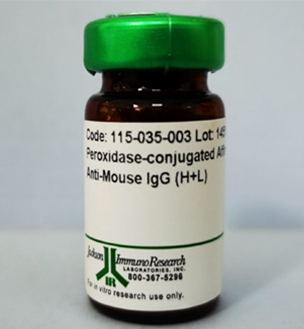
All conjugated antibodies should be stored in light-protected vials or covered with a light protecting material (i.e. aluminum foil). Conjugated antibodies are stable for at least 12 months at 4C. If longer storage is desired (24 months), conjugates may be diluted with up to 50% glycerol and stored at -20C to -80C. Freezing and thawing conjugated antibodies will compromise enzyme activity as well as antibody binding.
其他
Aviva Systems Biology总部位于加利福尼亚州圣迭戈,在中国北京设有办公室,专注于为研究需求提供多克隆和单克隆抗体、ELISA试剂盒、蛋白质和定制服务。Aviva Systems Biology生产了24,000种经过验证的多克隆抗体,并提供近20,000种ELISA试剂盒,定制实验室服务包括蛋白表达和纯化、抗体开发,以及ELISA的开发、验证和生产。Aviva Systems Biology为与独特物种和靶标相关的研究提供独特工具,研究领域包括转录因子、癌症、心血管、细胞生物学、DNA损伤和修复、表观遗传学、信号转导、细胞分化、干细胞生物学等等。