The p35 kDa protein of the spirochete Borrelia burgdorferi is being investigated for use as an early diagnostic marker of Lyme Disease. Borrelia may change its antigenic composition in its need for adaptation to stresses imposed by changes in conditions from cycling between its arthropod and mammalian hosts. Some B. burgdorferi proteins may be induced in the tick midgut during the feeding event. The p35 protein elicits a protective immunity from wild type B. burgdorferi. It has been shown that p35 expression in B. burgdorferi is upregulated in the stationary growth phase, and that a temperature of 34°C but not 24°C influenced the expression. The expression of many proteins correlated with early Lyme disease is affected by pH, the proteins being abundantly expressed at pH 7.0 (resembling the tick midgut pH of 6.8 during feeding) but only sparsely at pH 8.0 (a condition closer to that of the unfed tick midgut pH of 7.4). The encoding genes may be coregulated. The 35-kDa antigen has been shown to be a statistically significant marker in IgG immunoblots in a study of patients with early Lyme disease who presented with erythema migrans. Recombinant p35 protein may be useful as a diagnostic reagent, especially in combination with other antigens that have been deemed relevant in serodiagnosis of early Lyme disease.
应用类型
ELISA,Western Blot,
免疫原
MBP-fusion protein corresponding to Borrelia burgdorferi p35 protein.
来源宿主
Rabbit
反应性
Borrelia burgdorferi
保存建议
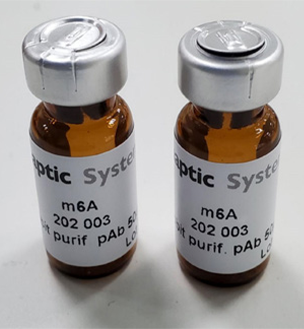
Store vial at -20° C or below prior to opening. This vial contains a relatively low volume of reagent (25 µL). To minimize loss of volume dilute 1:10 by adding 225 µL of the buffer stated above directly to the vial. Recap, mix thoroughly and briefly centrifuge to collect the volume at the bottom of the vial. Use this intermediate dilution when calculating final dilutions as recommended below. Store the vial at -20°C or below after dilution. Avoid cycles of freezing and thawing.