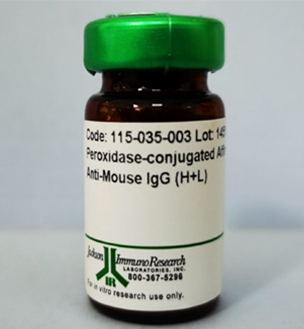
Anti-glutamate dehydrogenase antibody recognizes the glutamate dehydrogenase protein. Glutamate dehydrogenase is an enzyme that is present in the mitochondria of eukaryotes. Glutamate dehydogenase plays a role in urea synthesis by converting glutamate to α-ketoglutarate, and vice versa. Typically, the α-ketoglutarate to glutamate reaction does not occur in mammals as glutamate dehydrogenase equilibrium favours the production of ammonia and α-ketoglutarate. Glutamate dehydrogenase also has a very high affinity for ammonia. Therefore toxic levels of ammonia would have to be present in the body for the reverse reaction to proceed. In bacteria, the ammonia is assimilated to amino acids via glutamate and amidotransferases. In plants, the enzyme can work in either direction depending on environment and stress. Transgenic plants expressing microbial GLDHs are improved in tolerance to herbicide, water deficit, and pathogen infections. Anti-glutamate dehydrogenase antibody is suitable for researchers in Cell Biology and Immunology.
应用类型
Immunoprecipitation,Western Blot,
免疫原
Glutamate Dehydrogenase [Bovine Liver]
来源宿主
Rabbit
反应性
Bovine (Bos Taurus)
保存建议
Store vial at -20° C or below prior to opening. This vial contains a relatively low volume of reagent (25 µL). To minimize loss of volume dilute 1:10 by adding 225 µL of the buffer stated above directly to the vial. Recap, mix thoroughly and briefly centrifuge to collect the volume at the bottom of the vial. Use this intermediate dilution when calculating final dilutions as recommended below. Store the vial at -20°C or below after dilution. Avoid cycles of freezing and thawing.