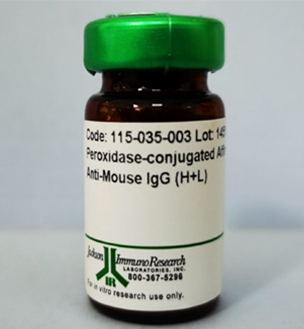
Anti-MyoD Antibody detects MyoD. The Myogenic determination gene (MyoD) was first identified by the virtue of its ability to convert embryonic mouse fibroblast cells to muscle cells. It was subsequently shown that forced expression of MyoD (human homolog is myf 3) gene in a wide variety of normal and neoplastic cells could either convert the cells to muscle cells or activate a set of the otherwise transcriptionally inactive muscle-specific genes in these cells. The regulatory domain of the MyoD gene product lies within a 70 amino acid region and comprises a basic DNA binding motif and a helix-loop-helix (HLH) dimerization motif. Subsequent studies identified three other genes whose products shared sequence homology for the basic HLH domain of MyoD. These are: myf5, myogenin (human homolog is myf4) and myf6 (also known as MRF4 and herculin). Anti-MyoD Antibody is ideal for investigators involved in cell cycle protein, cytokines and growth factors.
MyoD Antibody was produced in mice prepared by repeated immunizations with recombinant mouse MyoD protein at an internal amino acid sequence.
来源宿主
Mouse
反应性
H. sapiens (Human)
保存建议
Store vial at -20° C prior to opening. Aliquot contents and freeze at -20° C or below for extended storage. Avoid cycles of freezing and thawing. Centrifuge product if not completely clear after standing at room temperature. This product is stable for several weeks at 4° C as an undiluted liquid. Dilute only prior to immediate use.