CRASP-2 (Complement Regulator-Acquiring Surface Protein 2) of Borrelia burgdorferi binds FHL-1 and factor H binding protein in a distinct way. It may be predominantly expressed by serum-resistant Borrelia strains. Borrelia burgdorferi sensu lato has the ability to evade immune systems to persist in a variety of vertebrate hosts. This activity is dependent on a number of factors. Some Borrelia species bind host-derived fluid-phase immune regulators FHL-1 and factor H to their surface via complement regulator-acquiring surface proteins (CRASPs). Factor H and FHL-1 serve as cofactors for factor I, a serine protease that cleaves complement component 3b (C3b) directly on the cell surface and thereby confers resistance of spirochetes to complement-mediated lysis. It is possible that because of discontinuous binding regions in the factor H/FHL-1, long distance interaction may be involved in binding of both immune regulators. Putative coiled-coil structural elements may be important in the interaction of B. burgdorferi CRASP-1 with factor H.
应用类型
ELISA,Western Blot,
免疫原
MBP-fusion protein corresponding to Borrelia burgdorferi CRASP-2 protein.
来源宿主
Rabbit
反应性
Borrelia burgdorferi
保存建议
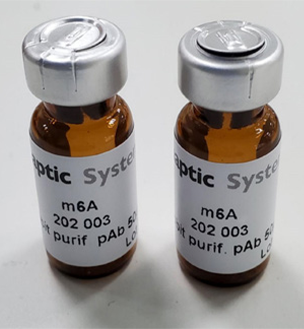
Store vial at -20° C or below prior to opening. This vial contains a relatively low volume of reagent (25 µL). To minimize loss of volume dilute 1:10 by adding 225 µL of the buffer stated above directly to the vial. Recap, mix thoroughly and briefly centrifuge to collect the volume at the bottom of the vial. Use this intermediate dilution when calculating final dilutions as recommended below. Store the vial at -20°C or below after dilution. Avoid cycles of freezing and thawing.